El ICHRA Is Not a Health Plan — It’s an Operating System
El ICHRA Is Not a Health Plan — It’s an Operating System
What is an ICHRA and how does it work?
Table of Contents
Definition
Analogy Quote
Video
Historical Story
Bridge Paragraph
Modern Explanation
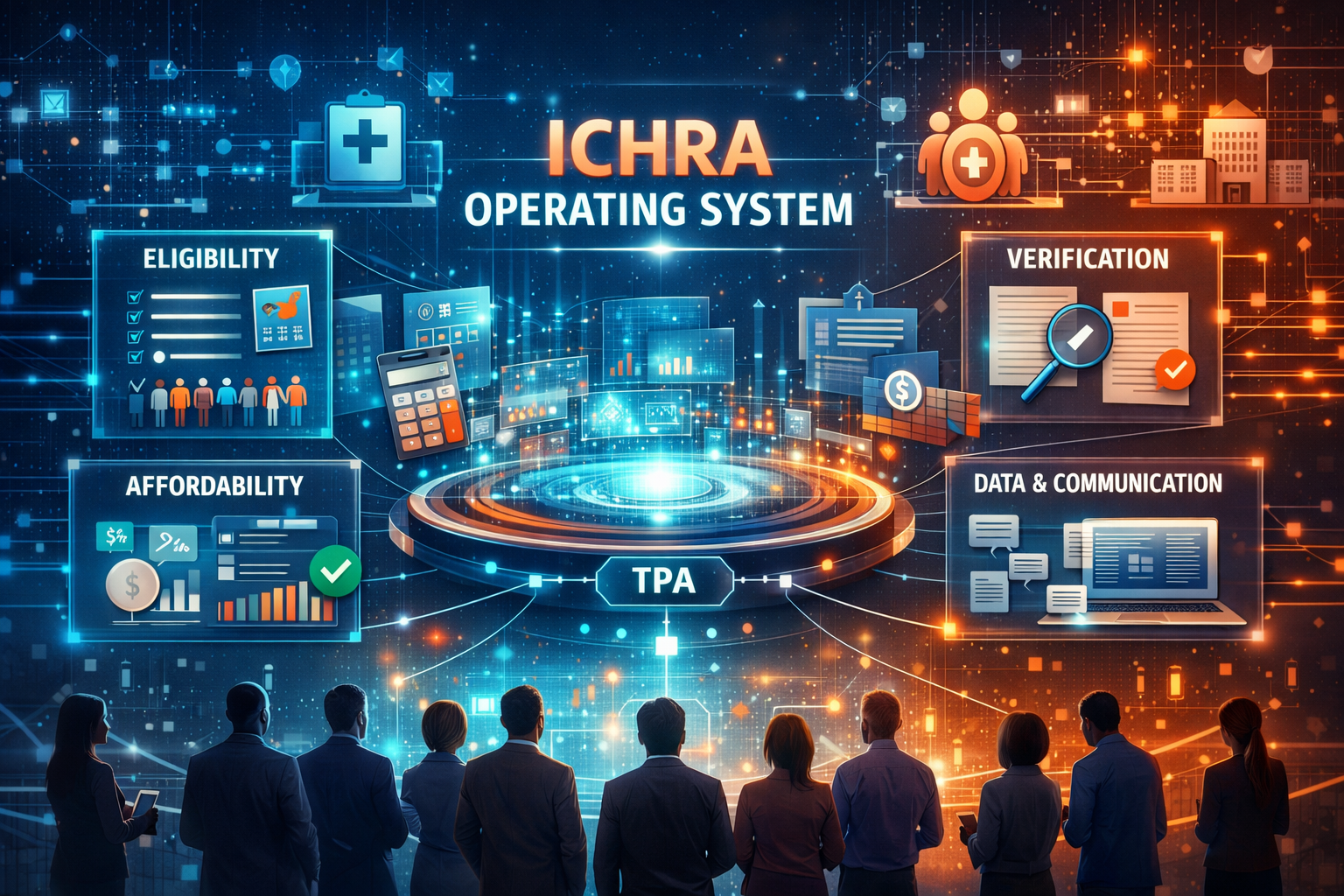
The ICHRA Operating System Framework
Contrarian Insight
Action Steps
FAQs
Call to Action
Sources
Definition
An ICHRA (Individual Coverage Health Reimbursement Arrangement) is an employer-sponsored benefit that reimburses employees tax-free for individual health insurance premiums and eligible medical expenses, provided regulatory requirements are met. It shifts employers from sponsoring a group health plan to sponsoring a defined contribution system governed by federal rules.
Analogy Quote
“Software fails when orchestration fails.”
Historical Story
In the early days of computing, companies believed the power of a computer lived in the hardware. Bigger machines. Faster chips. More memory. But organizations that focused only on hardware struggled. Systems crashed. Data fragmented. People worked around the machine instead of with it.
The breakthrough wasn’t a faster processor—it was the operating system. The OS quietly handled permissions, workflows, updates, and compatibility. When it worked, users barely noticed it. When it failed, everything stopped.
Healthcare benefits are going through the same transition. Employers once believed the value of health benefits lived in the plan itself: richer networks, lower deductibles, better carriers. But complexity exploded. Costs rose. Employees disengaged.
ICHRA emerged not as a better “plan,” but as a different architecture altogether.
Bridge Paragraph
This is the core misunderstanding: ICHRA is not a benefit design problem—it’s a systems design problem. Employers don’t fail with ICHRAs because employees choose the “wrong” plan. They fail because the operating system underneath—eligibility logic, affordability math, verification workflows, and communication—was never properly built.
Modern Explanation
So, what is an ICHRA and how does it work?
At a technical level, an ICHRA allows employers to set a monthly allowance that employees use to buy individual health insurance. But operationally, it is a regulated system with four critical components:
Eligibility & Classes: Employees must be segmented into IRS-approved classes with consistent rules.
Affordability Calculations: Contributions must meet ACA affordability thresholds using safe harbor math.
Substantiation & Verification: Employers must verify individual coverage and eligible expenses.
Data & Communication Flows: Employees must understand enrollment timing, reimbursements, and compliance guardrails.
When these elements are coordinated, ICHRA delivers flexibility, cost control, and employee choice. When they’re not, employers face compliance risk, employee confusion, and failed adoption.
The ICHRA Operating System Framework
The ICHRA Operating System Framework mirrors how great systems are built—quietly, precisely, and intentionally.
1️⃣ Rules Engine
Eligibility classes, waiting periods, and offer logic must be codified and enforced consistently.
2️⃣ Financial Kernel
Affordability testing, contribution modeling, and IRS limits must run continuously in the background.
3️⃣ Verification Layer
Proof of coverage, expense substantiation, and audit trails must be automated and defensible.
4️⃣ User Interface
Employees need clarity, not complexity—plain language, guided steps, and responsive support.
5️⃣ Orchestration Engine (TPA)
A Third-Party Administrator acts as the silent conductor, ensuring every part stays synchronized.
Contrarian Insight
Most employers believe ICHRA success depends on giving employees more choice, but the truth is it depends on better orchestration.
Choice without structure creates chaos. Flexibility without systems creates risk. The real advantage of ICHRA isn’t decentralization—it’s precision at scale.
Action Steps
Audit your current ICHRA setup as a system, not a benefit. Identify where rules, math, or workflows break down.
Model affordability dynamically, not once a year. Workforce changes break static models.
Automate substantiation and verification to eliminate manual risk and audit exposure.
Simplify employee communication with system-driven prompts and timelines.
Partner with a TPA built for orchestration. CaféHealth delivers AI-powered accuracy, faster reimbursements, and human-centered support that makes the system invisible to employees—and reliable for employers.
FAQs
What is an ICHRA and how does it work?
An ICHRA reimburses employees for individual health insurance and medical expenses through a regulated, employer-funded system that replaces traditional group health plans.
Is an ICHRA considered a health plan?
Legally yes, but operationally it functions more like infrastructure that governs contributions, rules, and verification.
Who is eligible for an ICHRA?
Eligibility depends on employer-defined classes that must follow IRS and ACA regulations.
How does affordability work in an ICHRA?
Employers must ensure contributions meet ACA affordability thresholds using approved safe harbors.
What happens if ICHRA is implemented incorrectly?
Poor implementation can trigger compliance penalties, employee dissatisfaction, and loss of tax advantages.
Do employees choose their own insurance?
Yes, employees select individual plans that meet minimum coverage requirements.
Call to Action
See how CaféHealth improves accuracy, compliance, and employee experience with AI-powered benefits administration. Start here: CafeHealth.com.
Sources
29 CFR §2590.702 – ICHRA Regulations
CMS Guidance on Individual Coverage HRAs